Witchspire Walkthrough: The Short Answer
If you only read one paragraph, read this one. The community-reported Witchspire walkthrough path runs in a clear order: finish the tutorial, build a Hearth as your base and fast-travel anchor, bond a starter Familiar (Quol for solo play, Locto for co-op), ignite the Luminary skill tree, clear the Aloonian Golem in the Meadows / Vyrs area, push through Timberline Basin to the Froblin Camp for Beeswax and the R’hyrrgar boss, then take on the Shuddersands’ Shudder Matriarch and Sand Wraith, and finally grind Hearth upgrades up to level 9 for the Windmill and Forester’s Hut before you touch the Spire’s four-key endgame — which is still incomplete in Early Access.
One important caveat up front: Witchspire has no officially named, numbered chapter list. The game launched in Early Access on Steam (App ID 2679100) on June 10, 2026 and is currently on roughly patch 0.1.4, so the “chapters” below are the community-reported progression checkpoints that experienced players actually follow. Treat every milestone, drop rate, and unlock here as community data, not official fact — the developers have not confirmed a linear story structure.
How This Witchspire Full Walkthrough Is Organized
Because the developers built Witchspire as a co-op open-world survival-crafting RPG rather than a linear campaign, a strict “Chapter 1, 2, 3” list would be misleading. Instead, this Witchspire full walkthrough splits the Early Access experience into the progression gates the community agrees you must clear in order:
- A short tutorial that teaches combat and gathering.
- A base-building phase where the Hearth becomes your respawn and fast-travel point.
- A Familiar-bonding phase that opens your first combat and utility companion.
- A skill-tree phase (the Luminaries) that unlocks tools, recipes, and the flying broom.
- A boss progression phase across the Meadows, Mira Isles, and Shuddersands.
- A late-game upgrade grind toward Hearth level 9 and an unfinished endgame.
Each section below is written as a checkpoint: what you’re trying to achieve, what the community reports you need, and what to watch out for. If you’re playing solo versus co-op, only the starter-Familiar recommendation and pacing really change — the rest of the route holds.
Chapter 1: The Tutorial and Your First Night
Every Witchspire run starts with a deliberately small slice of the map. The tutorial introduces a hostile mob called Mini-Bro, a small enemy that drops Spirit Dust in combat. That drop matters more than it looks: Spirit Dust is a versatile early material that is also harvested from Spirit Trees dotted around the Meadows, and it feeds directly into your first batch of craftable items.
Two crafting stations are available to you almost from the start, per community reporting:
- The Workbench, used for basic tools and utility items — including the basic Sickle for chopping small trees.
- The Alchemy Table, used for potions, elixirs, and Hearth upgrades.
The recurring advice from every guide hub is blunt: gather everything you pass. Wood from fallen branches and small trees, basic ore from Meadows mining nodes, and any Spirit Dust from the tutorial’s Mini-Bro all feed the next dozen recipes. More importantly, craft a Witch’s Lantern before the first night falls — community guides consistently flag it as the single component that makes surviving after dark practical.
If you’re wandering and unsure where to go, the game’s own framing tells you the goal: you play a novice witch or wizard trying to find your way home in a magical land where an ancient darkness is rising (per the official listing). The early game is less about a story beat and more about stabilizing — a base, a light source, and a first resource loop.
Chapter 2: Building the Hearth and the Fast-Travel Anchor
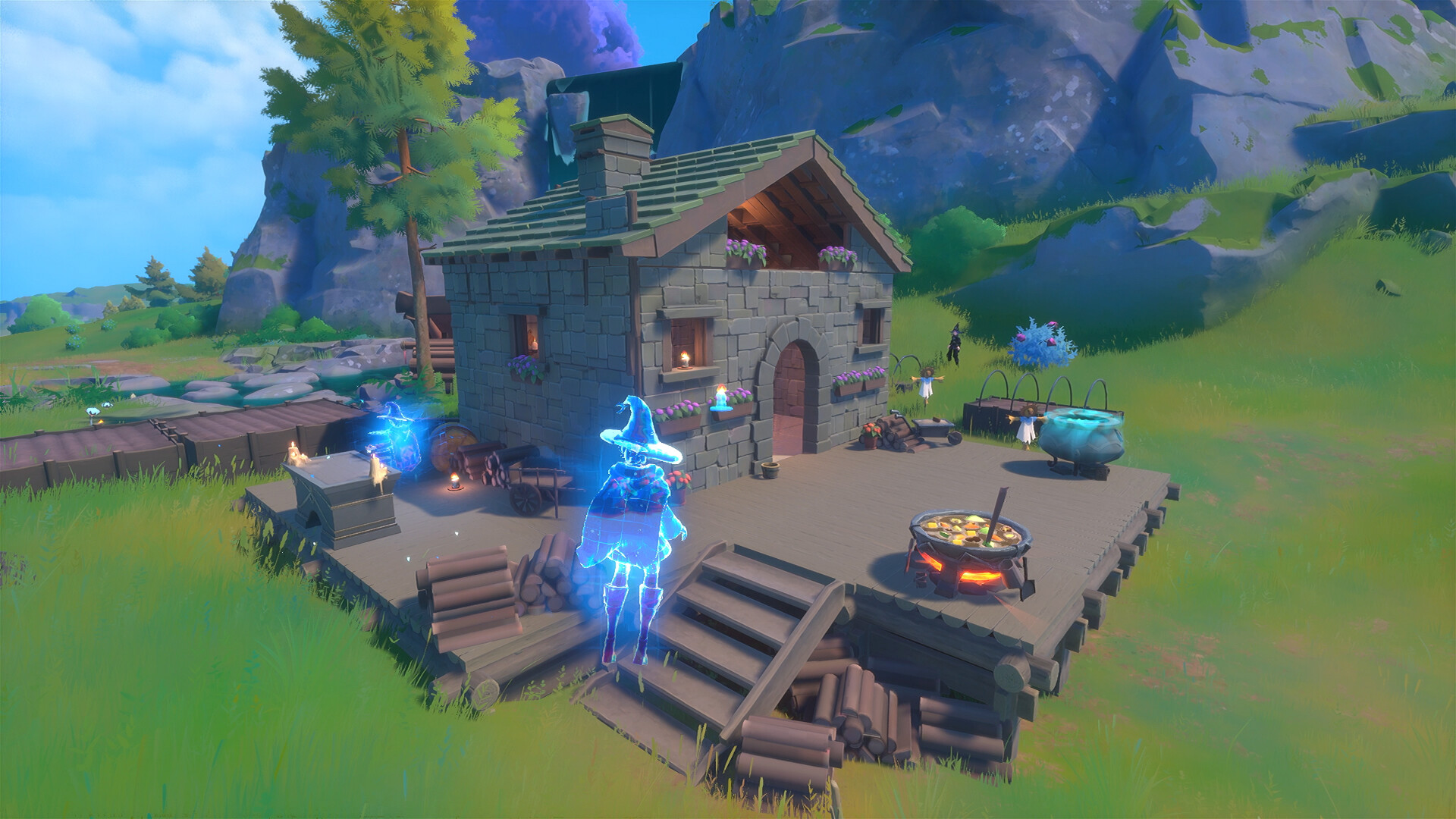
The Hearth is the centerpiece of this phase. It is your base core and your main fast-travel point, and it can be upgraded through 9 levels. Community guides overwhelmingly recommend building it early because it doubles as your respawn anchor — die anywhere and you return to it, and later you can teleport back with a Return Scroll that sends you to the nearest Hearth.
The single most important early recipe is the Hearth Core, which upgrades the Hearth to Level 2. Reported ingredients for the Hearth Core are:
- Spirit Essence
- Crystal (gathered from caves and crystal nodes)
From there, the upgrade path tightens up. The Hearth Level 1 to 2 upgrade also calls for Planks, a building material, so expect to convert wood early. Later gates follow a similar “build a thing to unlock the next thing” rhythm: the Windmill is unlocked by upgrading the Hearth to level 7 and in turn gates the level 8 upgrade, while Ritual Candles — crafted from wood at the Alchemy Circle — are required for the Hearth Level 7 upgrade.
Treat the Hearth as the spine of your whole run: almost every tool, Familiar slot, and building you want later is gated behind pushing its level up. The community-reported milestone to aim for first is simply Hearth level 2, because that is the gate that opens the Luminaries tool unlocks in the next chapter.
Chapter 3: Your Starter Familiar (Quol vs Locto)
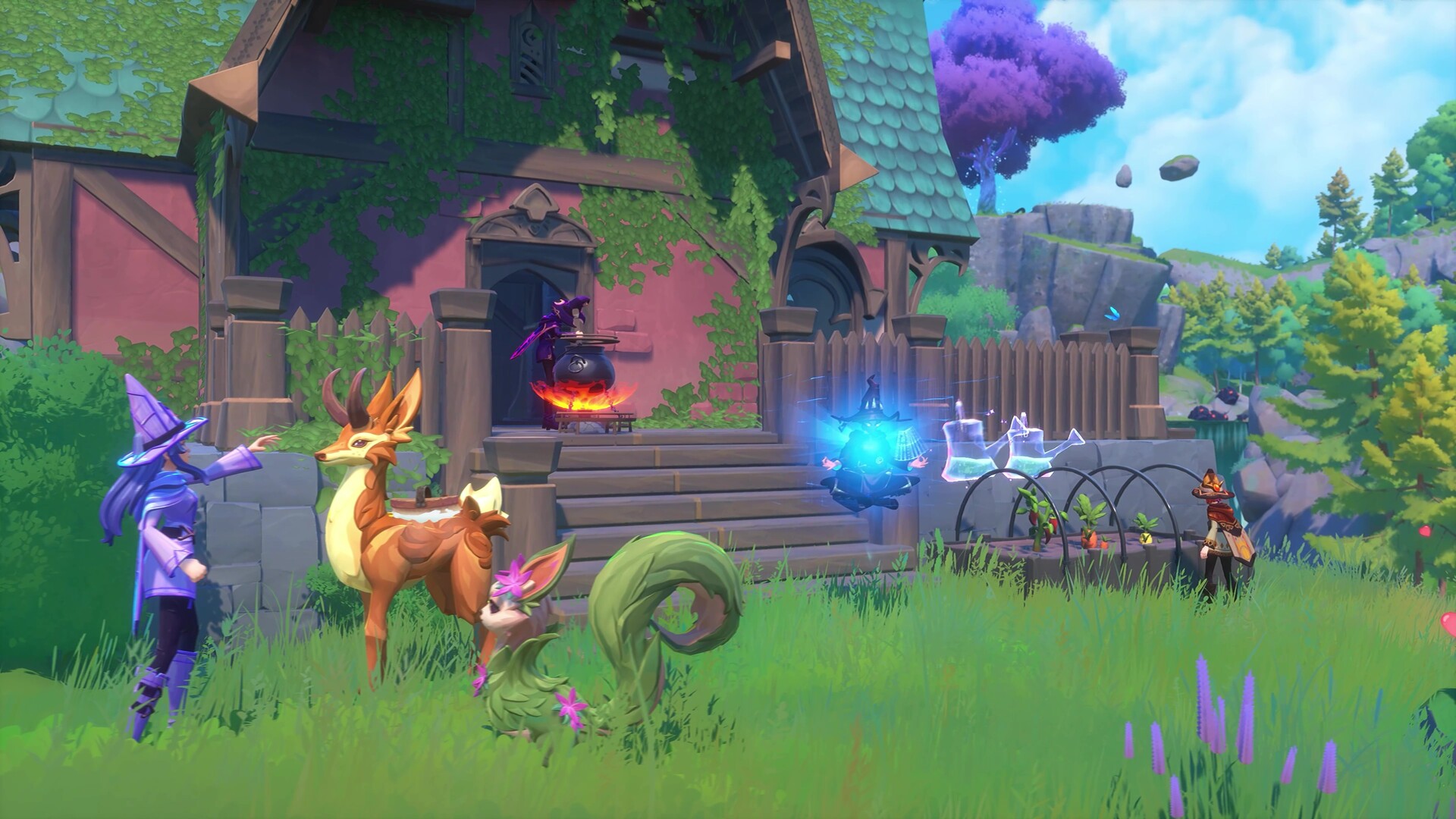
Familiars are the heart of Witchspire’s combat and base automation, and you get a meaningful choice immediately. Community guides split the recommendation based on how you play:
- Quol — an Ethereal-element Familiar and the recommended pick for solo players. Quol is the same species as Vex, and its respawn unlocks after you activate three wand pillars, so it fits a self-sufficient playstyle.
- Locto — a Lux-element support Familiar and the recommended pick for co-op. Locto appears around midday and can roll the rare Celestial variant, making it a strong team-support companion.
Your primary catching tool is Incense, which improves your bonding odds with wild Familiars. Incense comes in tiers you’ll craft as you progress: Simple Spirit Incense uses Spirit Dust, Incense of Calling requires a Spirit Shard, and Shimmering Incense is made from Greater Spirit Dust and Shimmer Dust.
Once bonded, Familiars do double duty. In combat they fight alongside you; at your base, certain Familiars can be assigned to production buildings. The clearest example is the Treetop, a large Familiar that can be assigned to the Forester’s Hut for passive Beeswax. The Mining Station, meanwhile, is a buildable station with no build limit that passively produces Gemstones when Familiars are assigned — a key part of the community’s gold strategy (see the economy note below).
There is also a rarity chase layered on top of bonding. Community-reported Familiar rarity runs from 1 star (Rare) up to 2 stars (Epic) and 3 stars (Legendary), with two special variants: the Celestial Familiar, the rarest glowing variety of any bondable Familiar, and the Shifty Familiar, an uncommon color-swapped version (one community reporter only ever saw a purple Rockling, versus the usual green).
Chapter 4: Luminaries, Tools, and the First Skill Unlocks
The Luminaries is the skill tree where Luminary Points unlock abilities, recipes, and Hearth upgrades. This is the phase where Witchspire stops feeling like a gathering sim and starts opening up. Community-reported unlocks tied to this tree include:
- Witch’s Pickaxe — unlocked through the Luminaries skill tree at Hearth Lv2, it mines at double speed.
- Spirit Logging Sickle — a Luminaries-unlocked sickle that gathers Spirit Wood fastest, making it the best early-game wood tool.
- Broom — a craftable flying broom whose blueprint unlocks from the central skill tree.
- Alchemy Circle — the station used to craft Ritual Candles for the Hearth 7 upgrade.
A quick warning the community keeps repeating: there is a naming conflict between the Witch’s Pickaxe and the Spirit Pickaxe. The Spirit Pickaxe is the tool required to mine Spirit Ore, which several key recipes depend on — including the Witch’s Lantern and the Familiar Whistle. Reported mining-tool progression runs Iron Pickaxe → Witch’s Pickaxe / Spirit Pickaxe → Phantom Pickaxe, with the Phantom Pickaxe as the final tier.
Tools aren’t the only thing the Luminaries opens. The Lux Wand (Brightspreader) is an end-tree wand unlocked via the Luminary skill tree at Hearth level 8, so treat that as a longer-term goal rather than an early grab.
Chapter 5: The Aloonian Golem and the Vyrs Boss Fight
Once your Hearth, Familiar, and tools are online, the natural first boss is the Aloonian Golem, a rock-and-Nature boss in the Meadows / Vyrs area and the most accessible starting boss. Community boss guides recommend bringing the right element counters:
- Wildroots — a Nature-element Familiar recommended for the Aloonian Golem fight.
- Starsmiths — a Crystal-element Familiar, also recommended for the Aloonian Golem.
To keep the fight (and everything else) supplied, build out your consumables. The Health Elixir is the most accessible early heal, restoring 50 HP with a 10-second cooldown, and it is crafted from Moonleaf and Spring Water. A Mana Elixir restores spellcasting energy for magic-heavy builds, and Purification Dust is a consumable that cleanses corruption — worth keeping for the corrupted encounters later.
Gear that supports this stretch includes the basic Forge station (unlocked through Meadows exploration, used for metal tools and the tier-2 pickaxe) and the Spell Weaving Loom (unlocked in Mid Meadows for scrolls, robes, and tome weapons). The Staff of Echoes, crafted at the Spell Weaving Loom, requires a Spirit Shard.
Chapter 6: Mira Isles, the Froblin Camp, and R’hyrrgar
After the Meadows, the community-reported route pushes outward. Players explore Timberline Basin shortly before the main quest leads to the Froblin Camp, a location in the Eastell region within the Mira Isles. Beyond Vyr’s Landing, Froblins that drop Beeswax can also be found.
The Mira Isles / Froblin Camp loop is your Beeswax farm. Beeswax is a crafting material dropped by Froblins and by the boss R’hyrrgar, and it can also be produced passively by the Forester’s Hut once you reach Hearth level 8. R’hyrrgar appears during the main story near the Froblin Camp and drops Beeswax — treat it as a story-linked boss rather than an optional side hunt.
There’s also a combat-material aside worth noting here: a Witch’s Pickaxe recipe in circulation lists Carapace and Froblin Goo as ingredients, but community sources dispute this recipe, so don’t over-invest in those materials on the assumption it’s correct.
Chapter 7: The Shuddersands and Its Two Bosses
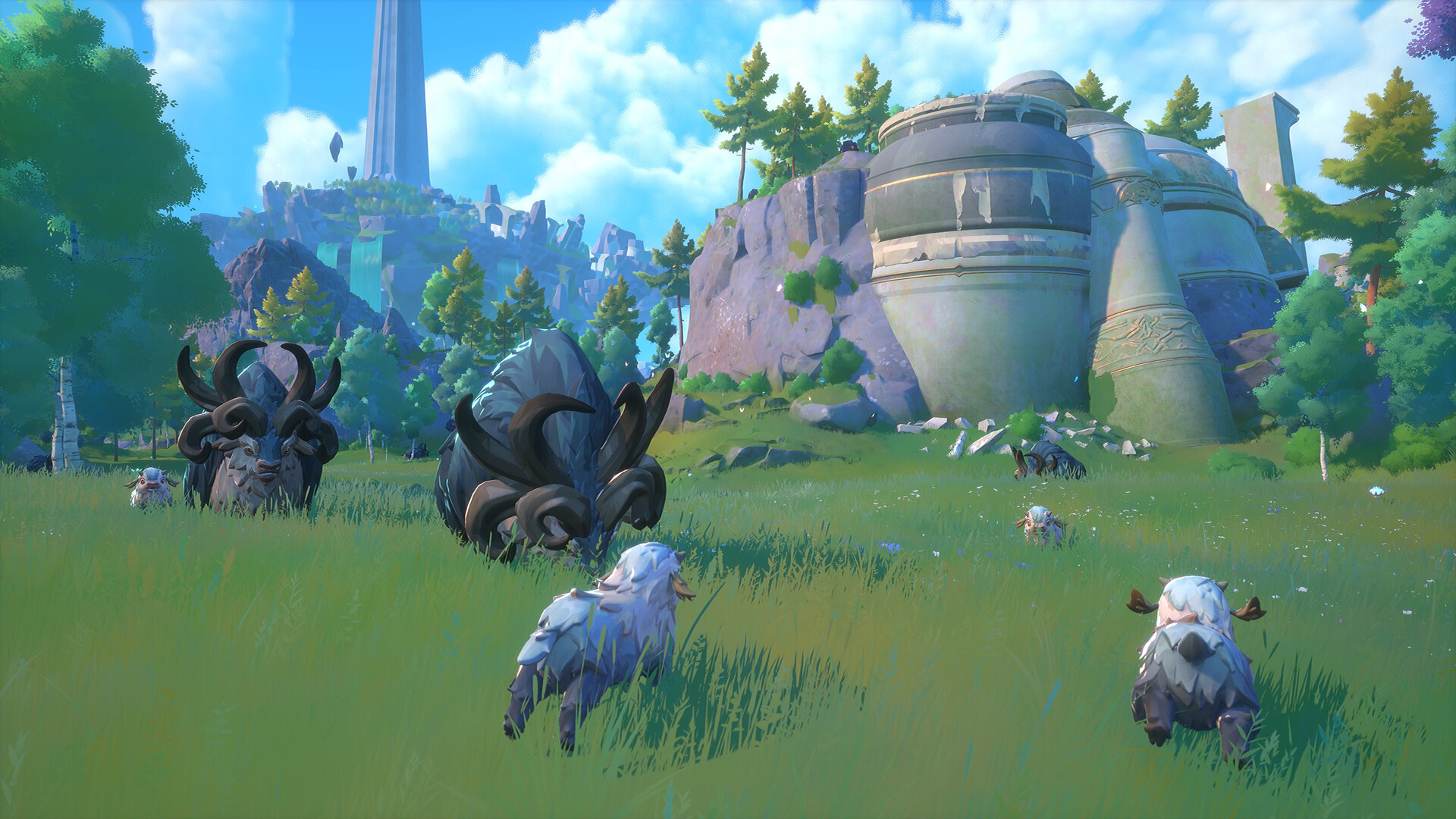
The Shuddersands Desert is the next major biome and holds two headline bosses, each with a distinct damage profile that dictates your Familiar lineup.
Shudder Matriarch — a Nox-aligned boss that uses corruption attacks and summons minions. Community guides recommend:
- Cloudpiercers — an Ethereal-element Familiar recommended for the Shudder Matriarch (and the Sand Wraith).
- Tomekeepers — a Lux-element Familiar recommended for the Shudder Matriarch.
Sand Wraith — a fast, elusive Ethereal-aligned boss specializing in hit-and-run attacks. Recommended counters:
- Cloudpiercers again for the Ethereal angle.
- Foretellers — an Astral-element Familiar recommended for the Sand Wraith.
Because the Shudder Matriarch floods the arena with minions, bring Purification Dust for the corruption and lean on minion-clearing abilities; the Sand Wraith is the opposite problem, so plan for burst damage to catch a target that won’t stand still.
Chapter 8: Moonlit Grove and the Grand Coven Robes
The Moonlit Grove is where the late Early Access gear chase lives. The Grand Coven Robes — high magic-resistance robes — have a recipe that reportedly comes from the Moonlit Grove boss. That boss is commonly identified as the Moonlit Guardian, an unverified Early Access boss associated with the Moonlit Grove biome. Community sources flag it as unconfirmed, so expect this step to shift as patches land.
This is also the phase where your Hearth economy matters. The community-reported gold strategy centers on Gemstones: they are the best Gold-per-hour trade item, sold for 25 Gold each at Mirella’s Shop. Because the Mining Station has no build limit and passively produces Gemstones when Familiars are assigned, scaling Mining Stations plus Gemstone mining is the standard way to fund the expensive late-game recipes and Hearth upgrades.
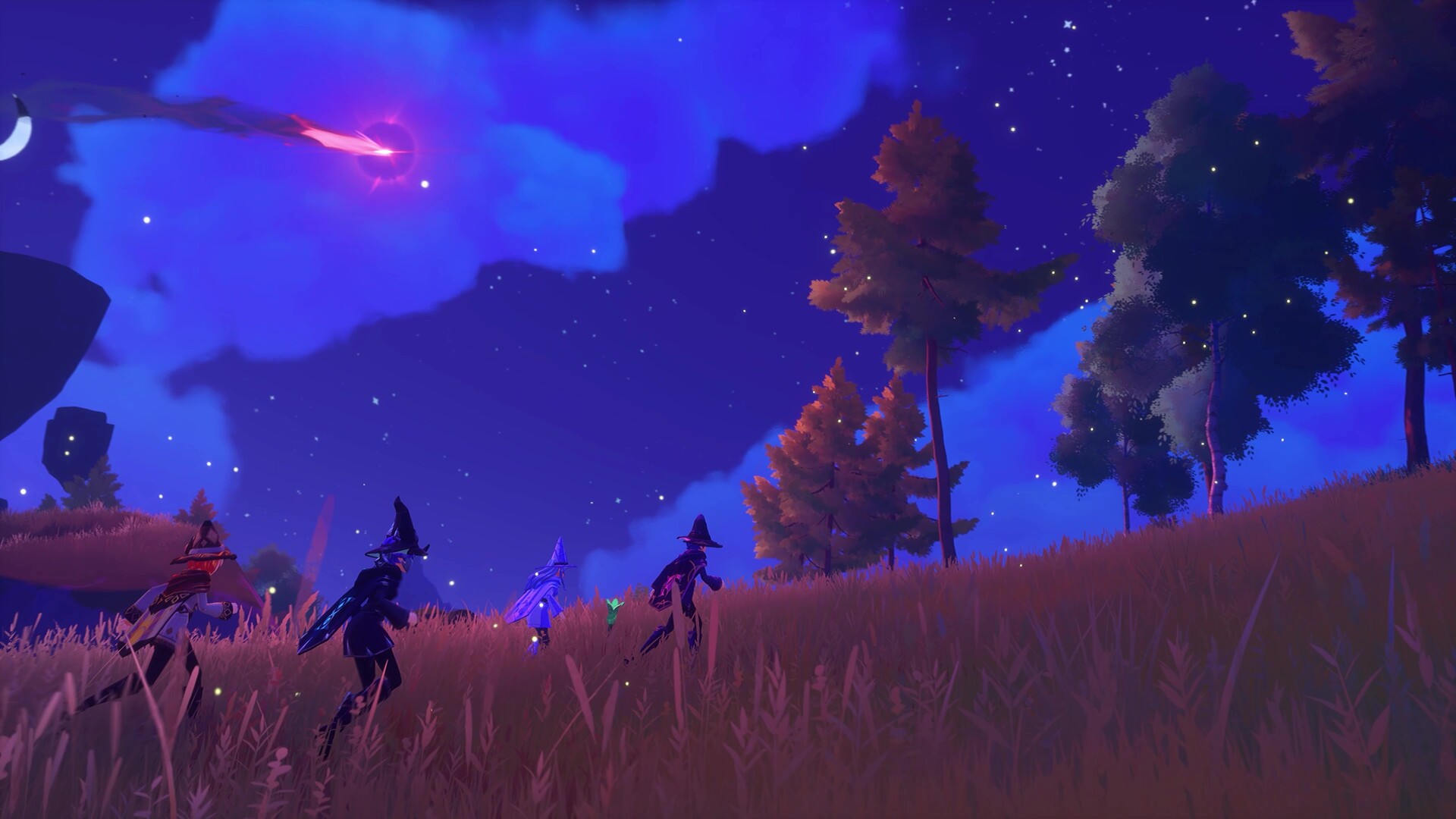
A couple of high-value trinkets are worth chasing around this point too. Geredd’s Fancy Bauble grants a +25% chance of double mining drops, which compounds across a long mining session. And the Trevo da Sorte, found on the starting island, greatly boosts farming legendary items from chests — the community strongly recommends grabbing it early, noting it reportedly has a 2-hour real-world respawn after collection (you must keep the world open for the timer to tick), with one spawn at the very peak of a mountain and another amid a cluster of five stones on a second mountain.
Endgame: The Spire’s Four Keys (Incomplete in Early Access)
The Witchspire itself is the central structure where story keys are inserted, and iron nodes sit nearby for last-minute crafting. Community sources describe the endgame as a four-key system tied to the Spire, but they are equally clear that this content is incomplete in Early Access and subject to change at any patch. In other words, this is the chapter that doesn’t fully exist yet — you can progress toward it, but there is no officially confirmed full endgame sequence to walk through.
Supporting that endgame are the top-tier consumables and materials: the Greater Healing Potion for a full vitality restore, Greater Spirit Dust for Shimmering Incense, and Brilliant Spirit Dust, whose source is unconfirmed but may come from portal bosses. Gold, Silver, and other late ingots gate behind skill and tool requirements — gold comes from beach deposits, silver from desert cliff routes, and both are smelted from ore in a charcoal-fueled Furnace.
One structure worth flagging as seasonal rather than story: the Witchspire name also connects to the game’s mythology of dormant spires awakening as a darkness stirs beneath the surface, so expect the four-key system to expand rather than stay static.
Witchspire Chapter Guide: Story Routes vs. Freeform Play
Here’s the honest truth a strict Witchspire chapter guide has to state: Witchspire is built as an open-world survival-crafting RPG, not a linear narrative. You can absolutely ignore the boss order above and simply build, gather, and bond Familiars for dozens of hours. What the community route gives you is efficiency, not a required path — the game does not lock you out of biomes with a hard story gate the way a classic single-player RPG would.
That said, a few things are effectively mandatory regardless of how you play, per community reporting:
- Build a Hearth early — it is both your respawn point and fast-travel anchor.
- Pick up a Familiar early (Quol solo, Locto co-op) so you’re not fighting alone.
- Keep the Luminaries moving — Hearth levels gate tools, the broom, and the Forester’s Hut.
- Bring Incense to every Familiar hunt to improve bonding odds.
- Farm Gemstones for gold since a lot of late-game content is gated behind resources.
Frequently Asked Questions
How long is the Witchspire walkthrough in Early Access? There’s no official completion time, and community sources don’t cite a fixed hour count. Because the Spire’s four-key endgame is unfinished, “finishing” currently means clearing the reported boss progression and pushing the Hearth toward level 9 — not rolling credits.
What’s the best starter Familiar? Community guides recommend Quol for solo players and Locto for co-op players. Quol is Ethereal and self-sufficient, while Locto is a Lux support that can roll the rare Celestial variant.
What’s the first boss I should fight? The Aloonian Golem in the Meadows / Vyrs area — it’s the most accessible starting boss. Bring Wildroots (Nature) or Starsmiths (Crystal) as counters.
How do I make gold fast? Mine and sell Gemstones at Mirella’s Shop for 25 Gold each, and scale Mining Stations with assigned Familiars because the station has no build limit.
Is the Moonlit Guardian real? It’s a commonly named but unverified Early Access boss associated with the Moonlit Grove biome, allegedly tied to the Grand Coven Robes recipe. Treat it as community-reported until the developers confirm it.
Community-Reported Sources and Confidence
Everything in this Witchspire walkthrough is drawn from community fan-guide hubs — sites like witchspire.online, witchspiredb.com, witchspire.org, and witchspiregame.wiki, plus Steam guides — and from the game’s own store listing for setting facts (developer Envar Games, Early Access launch June 10, 2026, App ID 2679100). Because Witchspire is in Early Access on roughly patch 0.1.4, no drop rate, recipe, boss location, or endgame structure here is officially confirmed. The safest way to use this guide is as a route map: follow the checkpoint order, treat every specific number as community-reported, and re-verify recipes in-game after each patch.