Note on data: Witchspire is in Steam Early Access (launched June 10, 2026), and most material, spawn, and recipe details below are community-reported rather than officially confirmed. Numbers, locations, and drop rates can change with patches (the community was tracking around patch 0.1.4 at the time of writing). Treat everything here as a starting map, not a fixed rulebook.
How Farming and Resource Gathering Work in Witchspire
“Farming” in Witchspire is not agriculture. It is the survival-crafting loop that keeps your witch supplied: gather raw materials in the wild, refine them at a station, then feed them into crafting and Hearth upgrades. Community guides describe the rhythm as a repeating four-step cycle.
- Gather. Collect raw wood, ore, dust, herbs, and creature drops across the open world.
- Refine. Convert raw inputs into usable parts, for example smelting ore into ingots at the Furnace (using charcoal) or turning wood into charcoal.
- Craft. Spend those parts at your stations to make tools, potions, incense, robes, and building materials.
- Upgrade. Push your Hearth to the next level. The Hearth is the heart of the base, prevents enemy spawns, enables fast travel, and can be upgraded through 9 levels. Higher Hearth levels unlock the structures that let you farm passively.
The stations that drive this loop were reported to unlock progressively. A Workbench and an Alchemy Table are available from the start (tools, the familiar whistle, bait, lantern, potions, elixirs, Hearth upgrades, and incense). Exploring the Meadows unlocks the Forge for metal tools and a tier 2 pickaxe, while the Spell Weaving Loom in Mid Meadows handles scrolls, robes, and tome weapons. The Alchemy Circle comes from the central skill tree and produces ritual candles.
The Witchspire Resource Map: Where to Farm by Region
Because Witchspire uses hand-crafted biomes rather than procedural generation, the same nodes tend to appear in the same places. The community-reported map looks roughly like this.
- Meadows / Vyrs — the early farming hub. Home to Iron Ore nodes and the most accessible starting boss, the Aloonian Golem. Many first-tier recipes and the Forge unlock here.
- Ink Crater (Inky Vent) — a crater with flaming trees. Reported to yield charcoal, wood, and copper ore, which makes it a strong early smelting run.
- Shuddersands Desert — a harsher biome that hosts the Shudder Matriarch and Sand Wraith bosses. Better suited to a leveled, geared witch.
- Mira Isles — an island group containing Eastell. The Froblin Camp sits here, and Froblins are the main reported source of Beeswax.
- Vyr’s Landing — community reports say Froblins also drop Beeswax beyond this point.
- Timberline Basin — an area explored early in the Main Quest, before reaching the Froblin Camp.
- Mira Isles Flight Pillar — noted as a landmark near a silver ore route.
- Moonlit Grove — associated with the unverified Moonlit Guardian boss and the source of the Grand Coven Robes recipe.

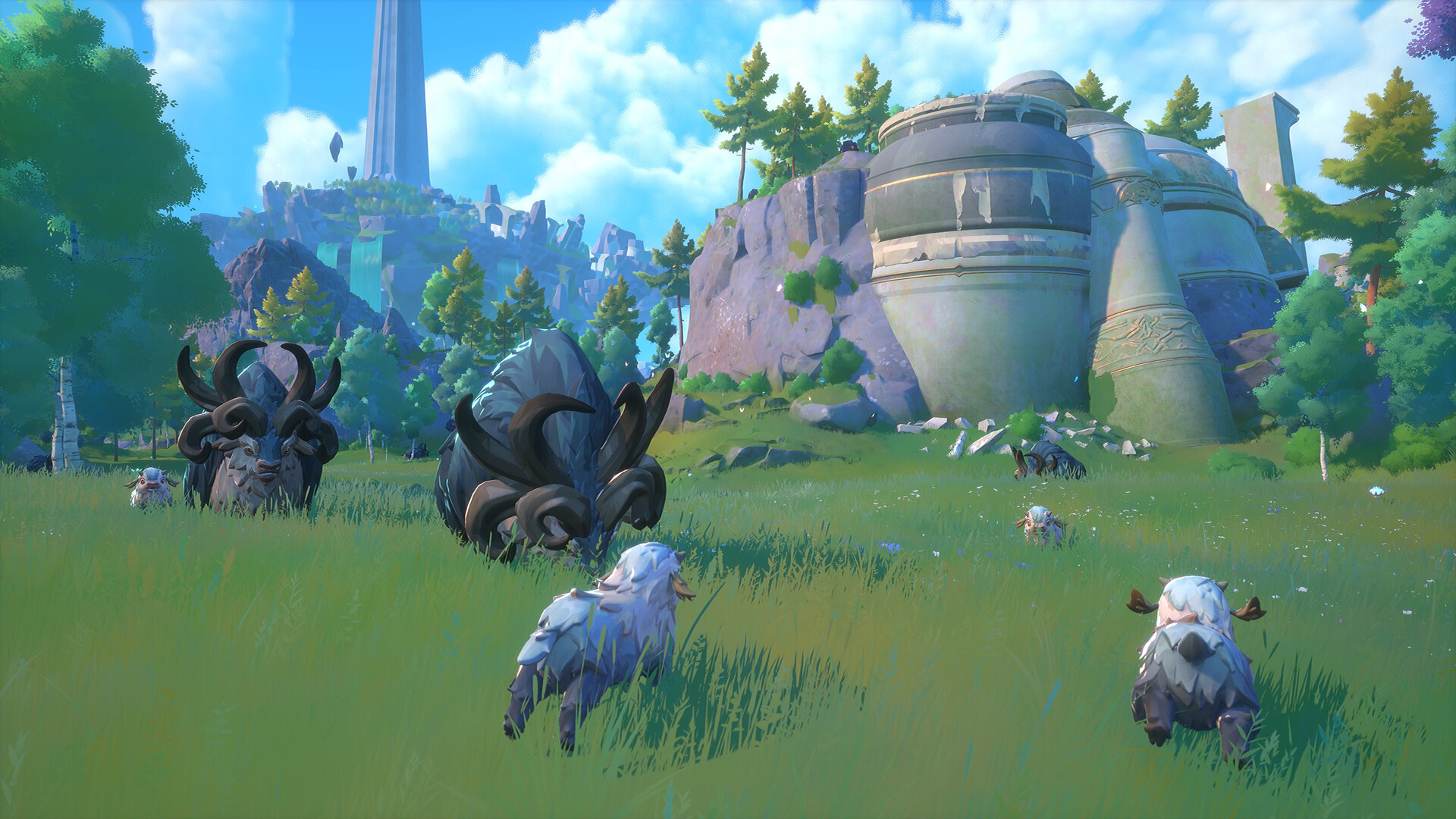
Beyond biome nodes, two creature drops are worth hunting: the large horned ram is reported to drop Horn and Rich Spirit Pollen, and the R’hyrrgar boss near the Froblin Camp drops Beeswax.
Building Materials and Hearth Upgrade Resources
If your goal is base progress, a handful of materials matter more than the rest. The Hearth Core is repeatedly called the single most important early recipe, because it pushes the Hearth to Level 2. Community data ties the Hearth Core to Spirit Essence and a Hearth Core upgrade that needs Crystal.
From there, each tier asks for its own signature inputs. Planks are used in the Hearth Level 1 to Level 2 upgrade, and Timber is required for the first Forge recipe. Later, a Ritual Candle (crafted at the Alchemy Circle) is used for the Hearth Level 7 upgrade, and the Windmill unlocked at Hearth 7 leads into the Level 8 upgrade. At Hearth 8, the Forester’s Hut becomes available. None of these gate values are officially confirmed and are subject to change.
Full Materials List (Community-Reported)
The table below consolidates the materials reported by the community, where they come from, and what they are used for. Where community sources do not state a farm location, that is marked as unconfirmed rather than guessed.
| Material | Category | Where to Farm / Source | Primary Use |
|---|---|---|---|
| Wood | Raw wood | Branches and small trees | Basic crafting, charcoal |
| Premium Wood | Raw wood | Larger trees | Better wood recipes |
| Spirit Wood | Core wood | Early-game gathering; Spirit Trees (Scroll of Regrowth) | Early crafting |
| Timber | Building wood | Crafting | First Forge recipe |
| Planks | Building | Crafting | Hearth Level 1 to 2 upgrade |
| Charcoal | Refined | Burning wood or chopping flaming trees (Ink Crater) | Fuel for the Furnace |
| Copper Ore | Ore | Ink Crater (Inky Vent), ore nodes | Smelt into Copper Ingot |
| Iron Ore | Ore | Nodes in the Meadows | Smelt into Iron Ingot |
| Spirit Ore | Ore | Early-game nodes | Several early crafting recipes |
| Silver Ore | Ore | Location-specific, near the Mira Isles Flight Pillar route | Smelt into Silver Ingot |
| Gold deposits | Ore | Late Early Access deposits | Smelt into Gold Ingot |
| Copper Ingot | Metal | Furnace (from copper ore) | Metal crafting |
| Iron Ingot | Metal | Furnace (from iron ore) | Metal tools |
| Silver Ingot | Metal | Location-specific silver ore | Location-specific recipes |
| Gold Ingot | Metal | Late Early Access gold deposits | Late-game crafting |
| Spirit Shard | Resource | Community data does not specify a node | Incense of Calling, Staff of Echoes |
| Crystal | Resource | Community data does not specify a node | Hearth Core upgrade |
| Spirit Essence | Resource | Community data does not specify a node | Hearth Core |
| Gemstone | Gem | Mining Station passive production | Sells for 25 Gold each |
| Spirit Dust | Dust | Base-tier dust | Hearth upgrades, incense |
| Greater Spirit Dust | Dust | Higher-tier dust | Shimmering Incense |
| Brilliant Spirit Dust | Dust | Highest-tier dust | Advanced recipes |
| Shimmer Dust | Dust | Community data does not specify a node | Shimmering Incense |
| Beeswax | Creature drop | Froblins (Froblin Camp, Eastell), R’hyrrgar boss; also Forester’s Hut | Crafting, passive production |
| Horn | Creature drop | Large horned ram | Crafting |
| Rich Spirit Pollen | Creature drop | Large horned ram | Crafting |
| Carapace | Creature drop | Listed in a disputed Witch’s Pickaxe recipe | Witch’s Pickaxe (disputed) |
| Froblin Goo | Creature drop | Froblins | Witch’s Pickaxe (disputed) |
| Moonleaf | Herb | Gathering | Health Elixir |
| Spring Water | Water | Gathering | Health Elixir |
Note that the Witch’s Pickaxe recipe (Carapace and Froblin Goo) is flagged by the community as disputed and not officially confirmed, so verify it in-game before committing rare materials.
Passive Farming: Structures and Familiars That Gather for You
The real efficiency jump comes when your base farms for you. Community reports describe two structures that convert assigned Familiars into a steady trickle of materials.
- Mining Station — passively produces Gemstones when a Familiar is assigned.
- Forester’s Hut (unlocked at Hearth 8) — passively produces Beeswax or Wood when a Treetop Familiar is assigned.
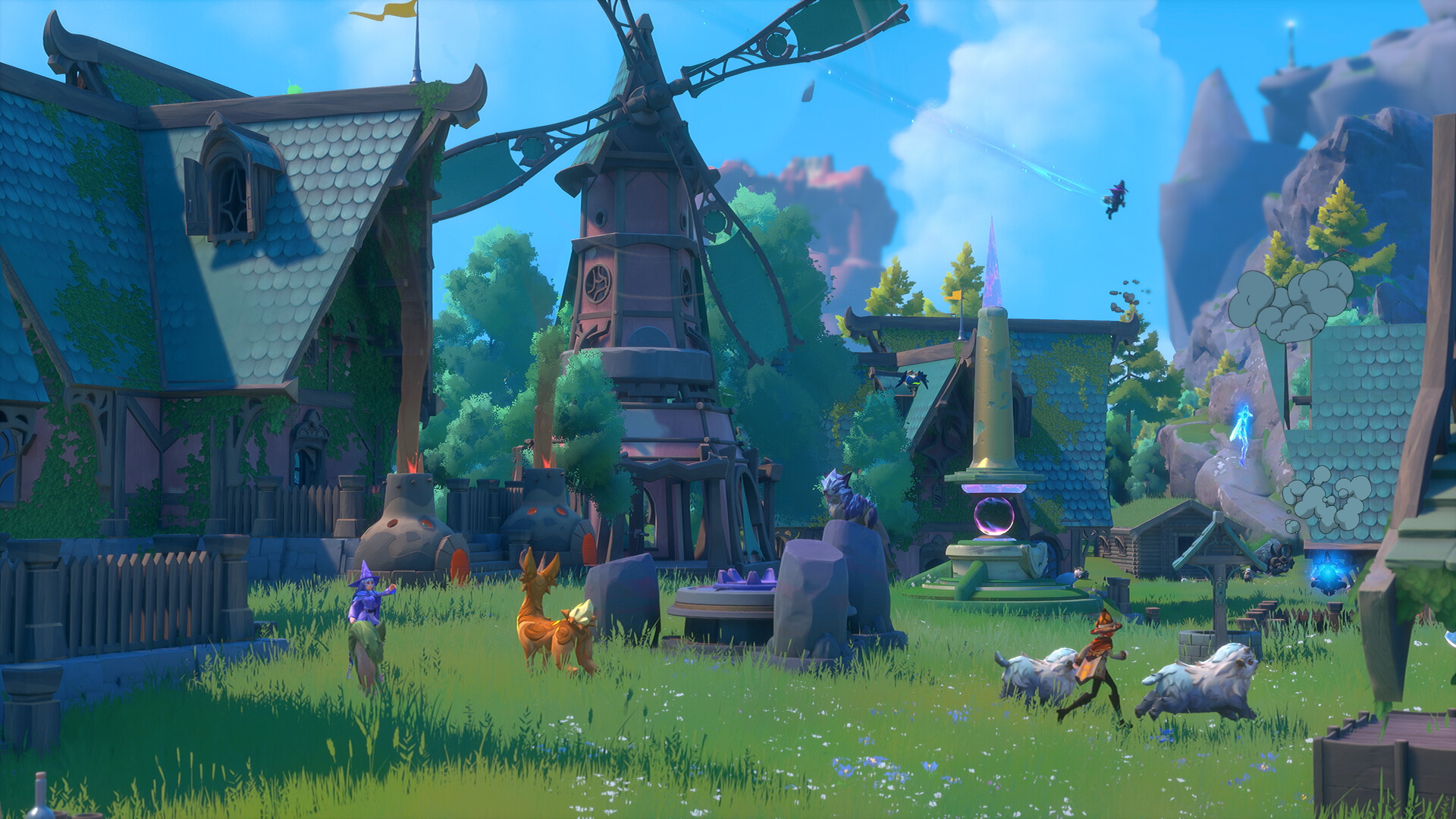
The Treetop is specifically reported to gather Wood or Beeswax at the Forester’s Hut, which makes it one of the most useful utility Familiars for a farming-focused base. This is a strong argument for pushing your Hearth toward Level 8 rather than spending every material on gear.
Best Gold Farming: Gemstones and Mirella’s Shop
For straight gold income, the community consensus points to a single material. Gemstone is reported to sell for 25 Gold each and to be the game’s best Gold-per-hour item, and Mirella’s Shop is said to buy Gemstones at full price. Combine that with a Mining Station and an assigned Familiar, and you have a passive Gemstone farm feeding the highest-value vendor in the game. This is community-reported and may be rebalanced in future patches.
Witchspire Farming Tips
- Gather everything as you explore. Because nodes and drops are patch-dependent, hoarding raw materials is safer than skipping them.
- Prioritize Hearth upgrades over side crafting. The Hearth is your respawn and fast-travel anchor, and it gates the passive-farming structures.
- Craft a Witch’s Lantern before your first night so you can keep gathering after dark instead of sheltering.
- Invest in the Luminary tree. The Luck node adds +1 luck per point, and the Scroll of Regrowth (also a Luminary node) spawns Spirit Trees when used, giving you a renewable Spirit Wood source.
- Hunt the Lucky Clover trinket early. Community reports describe a Lucky Clover trinket found on the starting island that is very strong for farming legendary items from chests. It reportedly respawns after roughly 2 hours of real time with the world open, and has two reported locations: on a mountain peak, and in the middle of five rocks on another mountain. Not officially confirmed.
Farming FAQ
How do I make gold fast in Witchspire? Farm Gemstones and sell them at Mirella’s Shop, which is reported to buy them at full price (25 Gold each).
Where do I get Beeswax? The main reported source is Froblins at the Froblin Camp in Eastell (Mira Isles), and beyond Vyr’s Landing. The R’hyrrgar boss also drops Beeswax, and a Forester’s Hut can produce it passively with a Treetop assigned.
What is the most important early recipe for base progress? The Hearth Core, which upgrades the Hearth to Level 2.
How does passive farming work? Assign a Familiar to a production structure: a Mining Station yields Gemstones, and a Forester’s Hut yields Beeswax or Wood via a Treetop.
Do farming resources respawn? Node respawns are not officially documented. The only reported respawn timer is for the Lucky Clover trinket, at roughly 2 hours of real time with the world kept open.