Witchspire: All Covens, Deities & Lore Explained
Covens are the beating heart of Witchspire’s identity system. Long before you craft your first Lantern or bond your first Familiar, you are asked to align yourself with one of the great magical orders taught at Thornveil Academy — and that single choice ripples through your entire playthrough, shaping your tech tree, your bonuses, and the role you play in a co-op party. This guide breaks down everything currently known about Witchspire’s Covens, the deities behind the world’s mythology, and how the two connect.
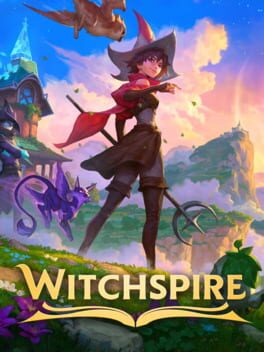
What Are Covens in Witchspire?
A Coven is a magical faction-style class that defines how your Witch or Wizard grows. According to the game’s own design pillars, Witchspire is built around Coven-based character progression, which is described as a branching tech tree combined with character growth, outfit collection, and Coven-specific bonuses. In practice, that means two players can start the same story, awaken the same dormant Witchspires, and still end up with meaningfully different builds simply because they belong to different Covens.
The narrative framing matters too. The game’s world is one where an ancient darkness rises and the Witchspires have awoken, so your Coven membership sits comfortably between two layers of lore:
- The mortal layer — you, a novice stranded in a strange land, learning magic at Thornveil Academy.
- The cosmic layer — the deeper mythology of the world’s powers, including its deities and the celestial forces the Covens align with.
Together, these two layers explain both why your Coven gives you power and what you are ultimately fighting against.
Thornveil Academy: Where the Six Coven Paths Begin
Thornveil is where players literally wash up at the start of the game, making it both the opening area and the symbolic home of your magical education. It is here that Thornveil Academy offers aspiring witches the choice of six Covens to join.
Because this is a formal academy structure, the choice reads more like a school of magic than a simple difficulty setting. You are not just picking a stat package — you are picking a tradition, a philosophy, and a social circle inside a game that explicitly rewards playing with friends.
One of the recurring characters tied to this setting is Professor Celesti, a member of the Thornveil Academy staff. Celesti’s specific lore hook is that she comments on Celestial Familiars, the rare, slightly glowing creatures tied to the skies. That detail matters because it links the academic side of the Coven lore directly to one of the game’s most prized creature-hunting goals.

Coven-Based Progression: Tech Trees, Bonuses, and Outfits
The official design language splits Coven progression into three visible pieces. Understanding them up front helps you plan around your choice rather than regret it later:
- The branching tech tree. Your Coven steers which nodes you can pursue. The game’s skill points, called Luminary Points, are spent in the Luminary Skill Tree, which includes nodes like Vigor (unlocks double jump) and Luck (raises the luck stat by 1 per point). The tech tree and the Coven choice interact to give each order its own flavor of growth.
- Coven-specific bonuses. Each order carries its own mechanical advantages, which is the core reason to commit to one tradition over another in a co-op group.
- Outfit collection. Cosmetics are part of the progression fantasy, and the standout example of Coven-themed gear is the Grand Coven Robes — high magic-resistance robes whose recipe comes from the Moonlit Grove boss.
That last point is worth underlining: the existence of Grand Coven Robes suggests the game treats Coven identity as something you literally wear, not just a menu selection. If you care about roleplay and appearance as much as raw stats, this is a strong argument for thinking carefully before you commit.
The Nightscribes: The Star-Attuned Coven of Night
Of the six Thornveil Academy Covens, the one that surfaces most often in community data is The Nightscribes. They are described as a highly revered Coven — mysterious and ambitious, attuned to the stars and to the darkness of night.
That description is thematically loaded. In a world where darkness is an active, rising threat rather than a neutral backdrop, a Coven that deliberately claims the night as its domain is an interesting and deliberate flavor choice. It suggests an order that studies the same forces other characters fear, and it pairs naturally with the game’s celestial and Astral themes.
If your instinct on a first run is to lean into the moodier, more scholarly side of Witchspire’s magic — stargazing, mystery, and ambition — the Nightscribes are the Coven name to watch as more data arrives.
The Eternal Ones: Witchspire’s Deities
Beyond the mortal Covens sit Witchspire’s deities, collectively referred to as The Eternal Ones, also known as The Eternal Three. This triad forms the divine layer of the game’s mythology — the powers that stand above the academies and orders, and the likely root of the “ancient darkness” that the world’s story is built around.
It is important to be honest here: detailed, officially confirmed profiles for each member of the Eternal Three are still thin in the early-access window. The name itself — Eternal — implies gods older than the Witchspires, the academies, and the Covens, which fits the game’s framing of an ancient conflict waking up again. As Envar Games expands the story, expect this pantheon to become central to the main quest and to the endgame content that is currently incomplete.
How the Coven Lore Ties Into Familiars and Celestial Magic
The Coven system does not exist in a vacuum — it is knotted together with the game’s creature-bonding and celestial themes.
- Celestial Familiars are a rare Familiar type that glows slightly, and bonding one earns the achievement “A Blessing from Starhaven.” The word Starhaven points to a sky-bound power, and Professor Celesti’s commentary on these creatures reinforces that the academic Covens study them seriously.
- Astral and Lux elements appear throughout the Familiar roster — for example, the Astral-element Foreteller and the Lux-element Tomekeeper — showing that light, stars, and the void are real forces in the world’s magic.
- The Luminaries themselves are a recurring motif. Players are tasked with reigniting the Luminaries, the dormant Witchspires have awoken, and the Luminaries skill tree governs much of your growth. Light versus darkness sits at the center of both the mechanics and the myth.

Choosing Your Coven: A Lore-Driven Approach
Because Witchspire is designed for co-op, it helps to treat your Coven choice as a party decision rather than a solo one. A few practical ways to think about it:
- Let the lore guide you first. Pick the tradition whose philosophy you actually enjoy — the night-and-stars ambition of the Nightscribes, or one of the other five Thornveil orders — then build around its bonuses.
- Coordinate with your friends. With six Covens and Coven-specific bonuses, a group that deliberately spreads across different orders is likely to cover more roles than one where everyone duplicates the same choice.
- Keep outfits in mind. Since Coven identity is expressed through gear like the Grand Coven Robes, a Coven you love thematically will keep rewarding you long after the stat differences even out.
What’s Still Unknown About Witchspire’s Coven Lore
Witchspire is in Steam Early Access, and the community data that describes its Covens is still being filled in. As of patch 0.1.4, the following remain open questions:
- The full names and identities of all six Thornveil Academy Covens beyond the Nightscribes.
- The individual names, domains, and myths of the Eternal Three deities.
- How the endgame Spire’s 4-keys system connects back to the Coven factions and the ancient darkness.
- Whether Coven choice can be changed or reset later, which is not yet confirmed in available data.
Until those gaps close, the safest approach is to treat every community-reported detail as patch-dependent. The core structure — six Covens at Thornveil Academy, Coven-based progression with a branching tech tree and specific bonuses, and a divine layer known as the Eternal Ones — is solid, and it gives you more than enough to roleplay a Witch that feels like yours.