Why There Is No Clean “Controls & Settings” List Yet
Witchspire is still in Early Access (Steam, June 10, 2026), and the community guide hubs that document it consistently flag their information as community-reported and patch-dependent, with the current build sitting around patch 0.1.4. That has an important practical consequence for this page: there is no officially published control list, key-binding table, or settings reference for the game. Nobody’s fan wiki, Reddit thread, or database has published a full default scheme yet.
So instead of inventing a key list, this guide covers what community sources do describe — the movement and interaction systems you actually control, the in-game levers that shape how hard the game feels, and the gaps you should verify yourself in the current patch.
Everything below is compiled from community-reported sources, not official documentation. Treat control inputs and timings as patch-dependent and confirm them in your own build.
Movement and Traversal You Control
Double Jump via the Vigor Node
Community sources describe double jump as a skill-tree unlock rather than a default ability. The Vigor node in the Luminary Skill Tree is reported to enable double jump, meaning your vertical mobility is gated behind spending Luminary Points. Because those points are a limited resource, unlocking traversal upgrades competes directly with other nodes — Luck, for example, is reported to add +1 to the luck stat per point invested.
The takeaway: if you want more control over how you move through the world, your first Luminary Points are a real decision, not an automatic one.
The Broom as Your Main “Control” Upgrade
Recurring beginner advice across multiple fan hubs is to upgrade the Hearth and the Luminary tree as early as possible, because doing so unlocks the broom. Once you have it, the broom becomes your primary way of covering distance across the open world — effectively the biggest movement upgrade the game offers.
Hearth Fast Travel
The Hearth acts as your base anchor and enables fast travel in addition to preventing enemy spawns around it. In practice, careful Hearth placement is the single largest piece of “traversal control” you have: it determines where you respawn, where enemies are suppressed, and where you can teleport back to.
Interaction and Crafting Controls at the Start
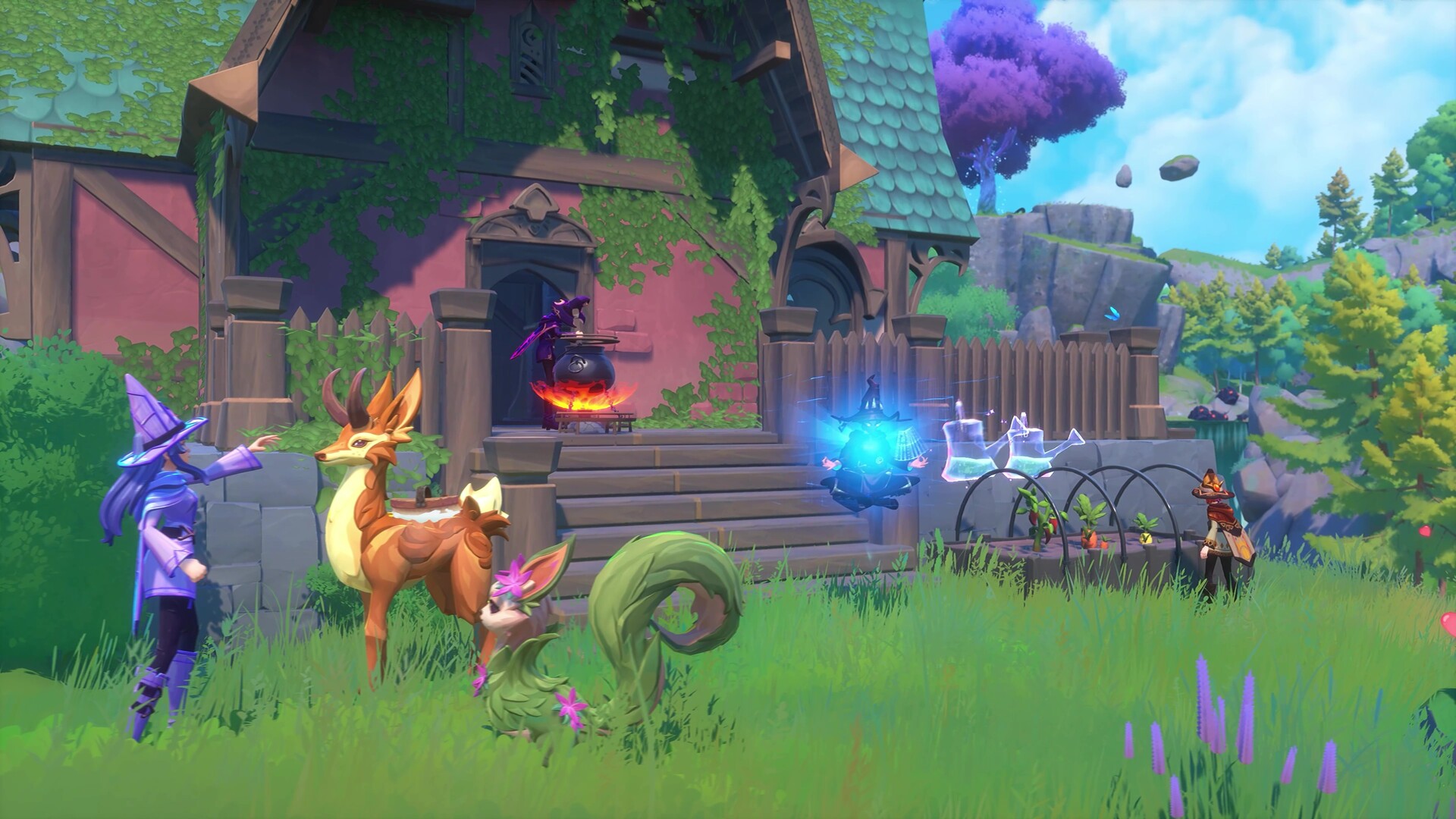
Two stations are available from the very beginning, which are the core of your interaction loop:
- Workbench — tools, the familiar whistle, bait, and the lantern.
- Alchemy Table — potions, elixirs, Hearth upgrades, and incense.
Further stations unlock as you progress, and the manner of unlocking matters for how much control you feel you have over your base:
- Forge — unlocked through Meadows exploration (metal tools and the tier 2 pickaxe).
- Spell Weaving Loom — unlocked in Mid Meadows (scrolls, robes, and tome weapons).
- Alchemy Circle — unlocked from the central skill tree (ritual candles).
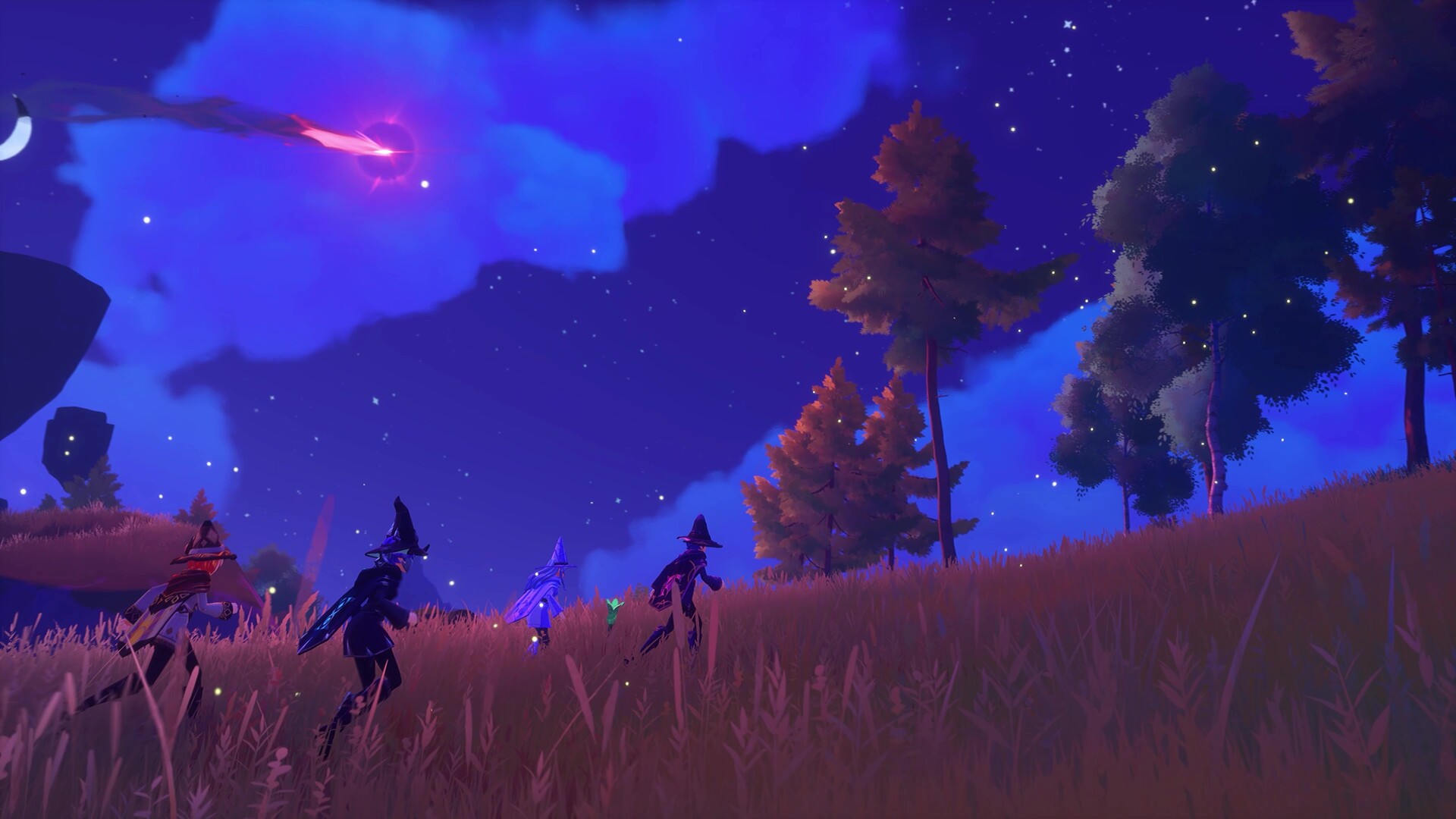
Crafting a Witch’s Lantern before your first night is one of the most repeated pieces of community advice, since night is when the world gets meaningfully more dangerous.
Difficulty Is Shaped by Systems, Not a Slider
Community sources do not describe an easy/normal/hard difficulty menu. Instead, difficulty in Witchspire-tune is effectively controlled through a handful of interlocking systems: which familiar you bring, how well your gear is upgraded, and whether you’ve prepared for the specific biome or boss in front of you.
Starter Familiar Difficulty
Your first familiar choice is the clearest low-effort difficulty dial. Community consensus points to:
- Quol (Ethereal) — described as the safest, most beginner-friendly starter and the recommended pick for solo players.
- Locto (Lux) — a support-flavored familiar that is the community pick for co-op play.
- Bril (Crystal) — a defensive starter, but with a catch (see the sundial section below).
- Fien (Nox) — suited to aggressive ranged combat and enemy control, a more demanding playstyle.
Boss Difficulty and Recommended Familiars
Bosses are where the difficulty curve becomes explicit, and community sources pair each boss with elemental counter-picks:
| Boss | Location | Element / Behavior | Community-recommended familiars |
|---|---|---|---|
| Aloonian Golem | Meadows / Vyrs | Rock + Nature; the most accessible starting boss | Wildroot (Nature), Starsmith (Crystal) |
| Shudder Matriarch | Shuddersands desert | Nox-aligned; corruption attacks, summons minions | Cloudpiercer (Ethereal), Tomekeeper (Lux) |
| Sand Wraith | Shuddersands | Ethereal-aligned; hit-and-run specialist | Cloudpiercer (Ethereal), Foreteller (Astral) |
| Moonlit Guardian | Moonlit Grove | Unverified / unconfirmed in Early Access | — |
| R’hyrrgar | Near the Froblin Camp | Drops Beeswax | — |
The Aloonian Golem is the natural first boss; both Moonlit Guardian and its associated Grand Coven Robes recipe are flagged as unverified in Early Access, so treat any details as provisional.
Familiar Rarity = Bonding Difficulty
Catching wild familiars has its own difficulty tiers, tracked by star ratings and their matching achievements:
- 1 star — Rare (“A Rare Find”).
- 2 stars — Epic (“Epic moment”).
- 3 stars — Legendary (“Strongest around”).
There are also Celestial familiars (they glow slightly, per the achievement guide), and Shifty variants that differ from normal familiars by color — the community-reported example is a purple Rockling where the standard Rockling is green.
Incense is the main tool for increasing bonding success. This matters enormously early: without incense, the chance to bond certain quest-adjacent familiars (Peb, and the Vex found in a cave behind a waterfall during an early quest) is described as practically nil.
Corruption, Night, and Healing
Survival difficulty is manageable if you keep the right consumables stocked:
- Purification Dust — cleanses corruption.
- Health Elixir — the most accessible early heal, crafted from Moonleaf and Spring Water.
- Mana Elixir — restores mana.
- Greater Healing Potion — a late-game potion that fully restores Witch vitality.
Timing-Based Input: The Bril Sundial
One of the few genuinely input-timing mechanics described by the community involves summoning Bril, the Crystal-element defensive starter. The reported method:
- Go during the day — it only works in daylight.
- Find the sundial.
- Step on the button at the exact moment the shadow aligns with the clock’s pointer/hand.
- You can only summon one at a time, so farming a 3-star Bril requires a strong wand and scrolls to kill it quickly enough to summon another before the shadow moves off the pointer.
This timing reportedly shifted with update 0.1.4 (July 8, 2026, community-reported): one player found they had to press the button when the shadow sat at roughly 120 degrees before reaching the pointer. If the standard alignment doesn’t work, that offset is a reported fallback.
Night-Only and Spawn-Timing Behavior
Several familiars are effectively gated behind the in-game clock, which functions as a soft “when can I do this” control:
- Fien and Firra appear near Mirella’s cabin at the start of night and linger until shortly after morning begins.
- Verlai follows the same night-time window — and is later replaced by Cindle.
- Etherit instead respawns normally, both day and night.
What Community Sources Still Don’t Cover
If you’re looking for a definitive reference on control remapping, accessibility options, graphics/audio settings, or a formal difficulty selector, the honest answer is that community documentation has not published those yet for this Early Access build. Fan hubs repeatedly note the game is subject to change, and the endgame — including the Spire’s 4-keys system — is described as incomplete.
Until official references appear, treat the systems above as your practical toolkit: control how you move (Vigor, broom, Hearth placement), control how hard a fight is (familiar element matchups, rarity, consumables), and verify any specific input or timing in your own patched build.